
Prime Minister Mark Carney emphasizes that strengthening international relations, particularly with Norway, is a crucial response to the escalating threats posed by Russia.
At a press briefing alongside Norwegian Prime Minister Jonas Gahr Støre in Ottawa on Sunday, both leaders addressed concerns raised by the Polish prime minister regarding potential Russian attacks on European nations that support Ukraine.
Støre remarked that such warnings deserve serious consideration, noting that Norway’s intelligence assessments indicate “real threats stemming from hybrid activities, potentially extending to sabotage.”
While Carney refrained from commenting on the validity of these threats, he expressed his alignment with Støre’s views.
“An advantage of this relationship and the broadening of our ties is enhanced intelligence sharing, broader perspectives, and the development of collective capacities,” he stated.

Prime Minister Mark Carney is in Norway for a three-day trip aimed at defense and strengthening alliances with Europe.
Carney mentioned that this also involves collaborating with the “right partners” among the Arctic nations. “The saying that resonates with me is ‘High North, low tension,'” he noted.
He elaborated that achieving this goal requires advancements in submarine and space capabilities.
In July, Carney opted to procure a dozen submarines from a European manufacturer rather than a South Korean company, following a fiercely competitive bidding process that lasted several months. The selected partnership includes a German firm collaborating with Norway, allowing the three nations to work together on the production and maintenance of the submarines.
Carney remarked that the “time invested, whether in the high north in Norway, meeting with the French president who is actively involved in various decisions, or our discussions today and in the future, is all interconnected.”
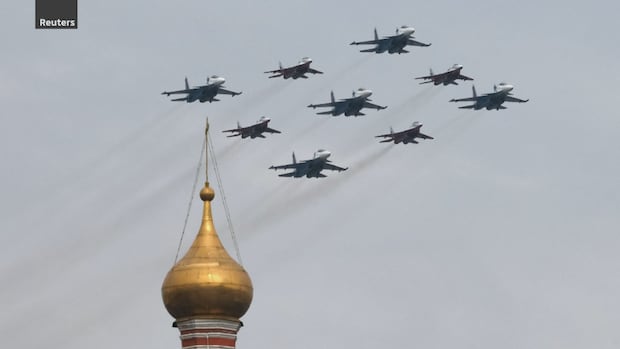
Russia’s foreign affairs minister accuses NATO of posing a “direct threat” with military maneuvers in the Arctic, as both Russia and Western allies like Canada trade accusations of jeopardizing peace in the region. However, Canada’s former ambassador notes that the situation is more intricate.
Prior to his meeting with Støre in Ottawa, Carney visited Saint-Pierre-et-Miquelon to confer with French President Emmanuel Macron earlier that same day.
Støre’s visit aligns with Carney’s pursuit of closer ties with Europe, including the possibility of “associate membership” in the European Union.
Although Norway is not an EU member, it has maintained an agreement with the political and economic bloc for thirty years, allowing both parties unrestricted access to each other’s markets for goods and services, as well as granting Norway access to most EU programs.

The day after Canada was presented with the opportunity to become an ‘associate member’ of the EU, Prime Minister Mark Carney addressed the European Parliament, committing to stronger ties with Europe, although specifics remain unclear.
Carney is seeking to enhance defense collaborations with Norway, alongside attracting investment from its substantial petroleum-based sovereign wealth fund.
In March, Carney visited Norway, marking the first time a sitting Canadian prime minister has traveled to the Nordic nation since 1980.
During that trip, the two leaders committed to advancing cooperation in various areas, including Arctic security, space exploration, critical minerals, and energy. Carney and Støre also highlighted their status as low-risk global oil producers in light of supply disruptions stemming from conflicts, such as U.S. President Donald Trump’s actions against Iran.
Norwegian officials frequently characterize Canada as a parallel nation, as both countries strive to balance a robust oil industry with initiatives promoting green energy and honoring Indigenous peoples.
Both nations emphasize the importance of multilateral institutions for conflict resolution while identifying as strong supporters of NATO and maintaining close ties with the EU, despite not being members. Both countries have placed support for Ukraine at the forefront of their foreign policy in response to Russia’s full-scale invasion that commenced in February 2022.
Since late 2024, Canada has implemented an Arctic foreign policy advocating for enhanced connections with Nordic countries in defense, strategic sectors, and environmental matters.

