
Four years after the tragic passing of a young woman whose name has become emblematic of the struggle for women’s rights and freedoms in Iran, Amnesty International asserts that the ensuing governmental repression constitutes a systematic campaign, with the responsible parties still evading justice.
Mahsa Amini was only 22 when she died on September 16, 2022, following her arrest by Iran’s morality police for allegedly wearing “inappropriate clothing.”
The Amnesty report released on Wednesday — a significant effort based on 270 interviews, over 2,000 video clips, and extensive documentary proof — claims that those same officials are currently engaged in ongoing violent crackdowns. The report identifies numerous officials purportedly accountable for actions deemed as crimes against humanity.
The authors of the report are urging international intervention to prevent the continuation of what they describe as a lethal pattern of repression that has persisted for years.
“The ongoing global inaction regarding international justice conveys a perilous message to the Iranian government. It essentially indicates that they can carry on committing crimes against humanity without fear of consequences,” stated Raha Bahreini, Amnesty International’s Iran researcher based in London, in an interview with CBC News.
“This normalization of mass killings during protests in Iran must come to an end.”
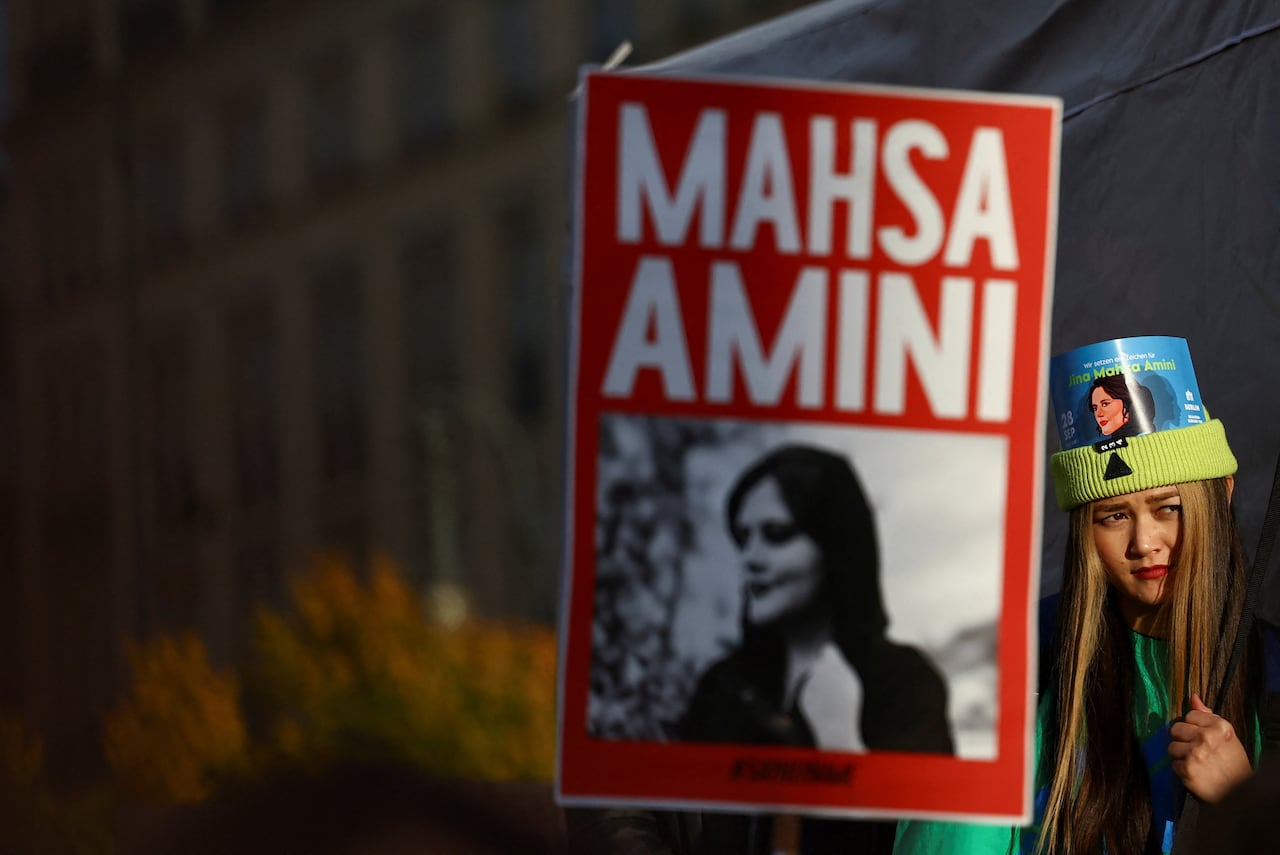
Mahsa Amini’s image, captured in Berlin, gained global attention in 2022 following her death, which ignited widespread protests. (Lisi Niesner/Reuters)
Mahsa Piraei’s mother was shot dead by security forces during a protest in Kermanshah amid the 2022 uprising. At a press conference on Wednesday to unveil the report, she asserted that the accountability for her mother’s death, along with that of hundreds of other Iranians, “must extend up the chain of command.”
“The individual who fired the bullet that killed my mother must be held responsible, but accountability cannot end there,” said Piraei, who resides in the U.K.
“My mother was not killed due to the actions of a single individual; she was killed by a system… And those at the highest echelons of power facilitated this violence.”
Piraei mentioned that officials from Iran’s Intelligence Ministry would only permit her family to view her mother’s body if they agreed to state that she was an innocent bystander and not a protest participant.
“They aimed to obscure the truth, but they ultimately failed.”
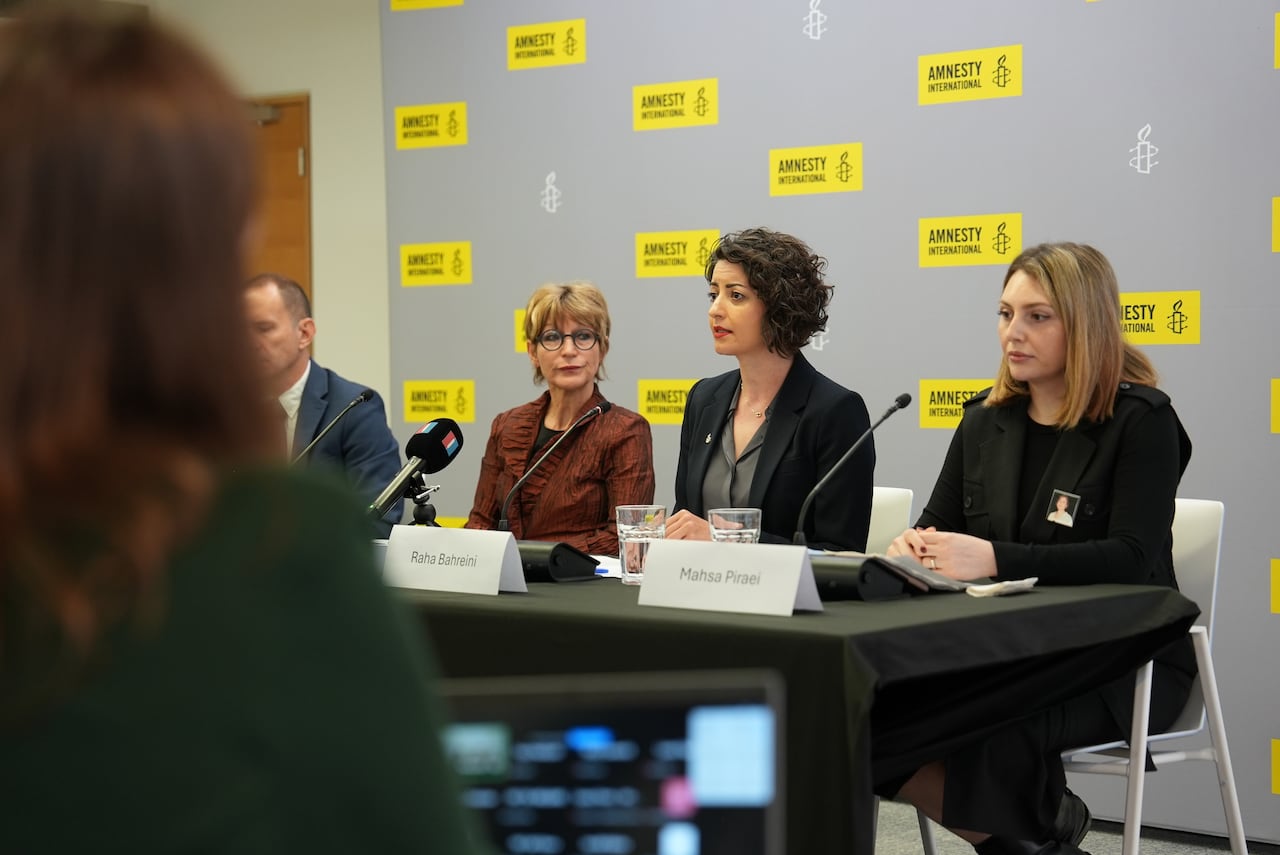
Amnesty International published a significant report on Wednesday, asserting that Iranian authorities committed crimes against humanity during the suppression of the 2022 Woman, Life, Freedom uprising. Secretary General Agnès Callamard, left, spoke at a press conference in London alongside Raha Bahreini and Mahsa Piraei. (Adrian Di Virgilio/CBC)
Thousands killed in protests earlier this year
The U.K.-based NGO presents evidence it claims constitutes crimes against humanity, which include murder, torture, enforced disappearance, imprisonment, rape, and persecution based on political, gender, ethnic, and religious grounds to suppress the uprising.
While the protests earlier this year were sparked primarily by economic issues such as soaring inflation and deteriorating living conditions, rather than the deaths and rights violations of women, Amnesty noted that the backlash echoed broader demands for political reform and was met with the same security forces accused of violently quelling the 2022 uprising.
In January, the U.S.-based Human Rights Activists News Agency reported verifying 7,007 fatalities linked to the protest crackdown.
“The cycle of protest suppression in Iran follows a painfully familiar pattern. It captures media attention for a time, governments issue statements of condemnation, and then the focus fades away,” Bahreini remarked.

Images of the victims from the deadly crackdown on widespread protests in Iran following Amini’s death, which sparked the Woman, Life, Freedom movement. (Amnesty International)
Minority groups disproportionately targeted, report says
Amini, a Kurdish-Iranian, passed away three days after slipping into a coma while in police custody.
Her Kurdish name Jina (or Zhina), meaning “life” in Kurdish, continues to be used by Kurdish activists and rights organizations, reflected in the slogan of the Woman, Life, Freedom movement.
The protests ignited by Amini’s death initiated a pattern of unlawful killings that began in Kurdistan province, according to the Amnesty report.
The findings indicate that Iranian authorities disproportionately targeted Kurdish and Baluchi communities, which predominantly follow Sunni Islam in a largely Shia country, employing “lethal repression.”
Both of these groups reportedly experienced a “devastating share” of casualties in 2022, accounting for approximately 62 percent of the total known victims despite representing at most 15 percent of the country’s populace.
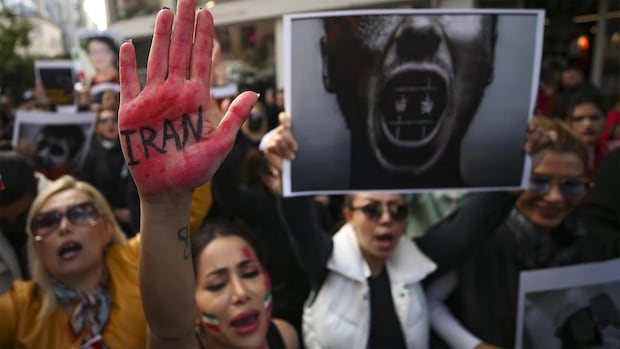
CNN’s chief international anchor Christiane Amanpour discusses Iran’s morality police and the importance of the women’s rights protests ignited by Mahsa Amini’s death in police custody last month.
The revelations also come amidst ongoing armed conflict, as the U.S. and Israel have declared war on Iran since late February, with negotiations currently stalled to resolve the months-long regional conflict.
While U.S. and Israeli representatives have predominantly defended military actions against Iran based on security concerns — including its nuclear and missile initiatives — Amnesty warned against leveraging the Iranian government’s human rights violations to justify unlawful military assaults.
In July, former President Trump criticized Iran’s leadership following the execution of two protesters, referring to officials as “savages.”
“Amnesty International categorically opposes breaches of international law by all parties and rejects any attempts to exploit the suffering of human rights violation victims in Iran to rationalize unlawful attacks that further harm civilians,” stated Secretary General Agnès Callamard.
-
Mahsa Amini, who died in Iranian police custody, awarded Sakharov human rights prize
-
What’s happening in Iran? Breaking down the deadly protests shaking the country
According to Amnesty, the protests in 2022 led to the deaths of 377 individuals, including 56 children.
Most recorded fatalities were attributed to security forces during the dispersal of protests from September to December, while others died in custody, post-release — as in Amini’s case — or under “suspicious circumstances suggesting state involvement.”
“In line with enduring patterns of denial and cover-up, authorities have only acknowledged 202 deaths, incorrectly attributing most to non-state actors, ‘rioters,’ or ‘armed terrorists,’ despite overwhelming evidence to the contrary,” Amnesty stated in its release.
The organization reported that it communicated its findings and the names of officials cited in the report to Iran’s Supreme Leader Mojtaba Khamenei and senior security officials but has yet to receive any response.
Calls for criminal probes into 87 officials
Amnesty’s report reveals what it identifies as the chain of command behind the alleged crimes against humanity, naming 87 officials it believes should face criminal investigation.
“The list, while not comprehensive, includes individuals from the highest echelons of Iran’s security forces down to officials at regional and county levels,” Amnesty stated in a news announcement.
Among the 87 identified individuals are 10 national officials and 77 officials operating at provincial, regional, and county levels.

Amnesty’s investigation has identified 87 officials it claims must be criminally investigated for their alleged roles in implementing state policies that employed lethal force to subdue nationwide protests. (Amnesty International)
The report highlights that among those named is the deceased Supreme Leader and commander-in-chief of all armed forces, Ali Khamenei, and the late head of the Chief of Staff of the Iranian Armed Forces, Mohammad Bagheri. Both were killed in February 2026 during air strikes conducted during the U.S.-Israeli military offensive against Iran.
Amnesty International also mentions Ahmad Vahidi, who served as interior minister during the 2022 protests and subsequently became the commander of the Islamic Revolutionary Guard Corps in March. It also identifies former deputy interior minister for police and security, Majid Mir Ahmadi.
“This inquiry unveils the layers of command and coordination behind the lethal crackdowns on protests by Iranian authorities,” Callamard stated.

Mahsa Amini’s death while in the custody of Iran’s morality police for wearing her headscarf too loosely sparked months of protests, representing one of the most significant challenges the Islamic regime has faced. One year later, CBC’s Ellen Mauro examines what has changed, and what remains the same.
Spirit of resistance still alive
Despite the deadly repercussions since 2022, Bahreini indicated that acts of civil disobedience are now being carried out with greater “courage.”
While Iran’s hijab regulations remain legally enforced for women, the intensity of enforcement has fluctuated in the years following the uprising.
“The Woman, Life, Freedom movement has achieved significant milestones in shifting societal attitudes towards compliance with discriminatory laws,” she noted, pointing out that authorities are wary of another uprising should strict enforcement be resumed.
“The regime has managed to stifle street protests, but it has not succeeded in extinguishing the spirit of resistance and defiance.”

