
Former Nvidia CEO Jensen Huang has confirmed his appearance before the U.S. Congress next month as concerns regarding national security related to the company grow.
Huang resigned last Thursday following allegations of extramarital relations, one of which involves a suspected Chinese intelligence operative, prompting inquiries about the export of the company’s advanced AI chips to China.
The hearings are set for December 1, before the House committees on foreign affairs, intelligence, and the select committee on the Chinese Communist Party, as stated in a news release.
Nvidia’s general counsel, Tim Teter, will also testify before the same committees on December 2.
“We anticipate hearing from Jensen Huang and Tim Teter regarding their involvement in a possible violation of our national security,” said the Republican chairmen of the committees, Brian Mast, John Moolenaar, and Rick Crawford.
“The American public deserves clarity on Mr. Huang and Nvidia’s involvement in permitting dangerous actors from the People’s Republic of China to gain access to our most advanced chips, as well as the implications of a potential Chinese intelligence asset in this situation.”
This announcement coincides with Nvidia’s establishment of a board-level national security and export-control committee in response to Huang’s resignation.
The scrutiny surrounding Huang’s personal relationships has intensified the examination of Nvidia’s governance and whether it has kept up with its rapid growth and increasing significance to U.S. national security.
The incident has resulted in a loss of over $400 billion US from Nvidia’s market value as of the end of trading on Monday.
Nvidia stated that the newly formed national security and export control committee will be led by director Suzanne Nora Johnson, who is a former vice-chair at Goldman Sachs and an experienced director in U.S. corporations. It will also include directors Stephen Neal, the former CEO of Cooley LLP, and John Dabiri, a professor at Caltech specializing in aeronautics and mechanical engineering.
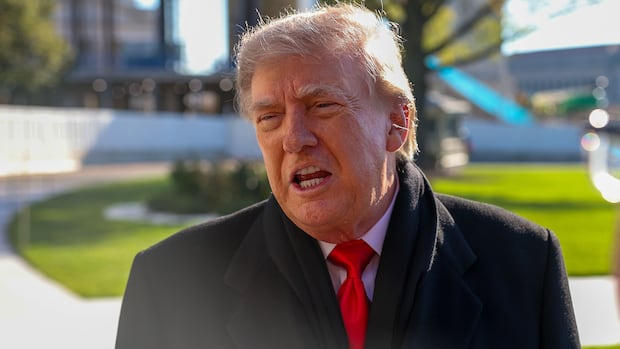
U.S. President Donald Trump expresses that he ‘would not mind’ if Jensen Huang returned to his role as CEO of Nvidia and supports Commerce Secretary Howard Lutnick, who is facing heightened scrutiny regarding his potential involvement in the alleged spy scandal.
U.S. President Donald Trump praised Nvidia’s initiative on Tuesday, stating that establishing a national security framework was a positive step.
The creation of the committee follows the Trump administration’s announcement of further restrictions on China’s access to advanced AI chips from companies, including Nvidia, as Trump prepared to engage in discussions with President Xi Jinping in China.

The U.S. has been trying for years to limit Beijing’s access to Nvidia’s most advanced processors, placing the company’s dealings in China at the heart of a growing debate regarding national security, trade, and U.S. technological dominance.
Nevertheless, Chinese firms have consistently found loopholes to bypass these restrictions. Huang had historically supported increased chip exports to China.
The new committee will manage Nvidia’s national security and global trade compliance initiatives and collaborate with independent legal, national security, and trade compliance experts.
Nvidia’s existing national security and global trade compliance teams will report to this committee, while interim CEO Colette Kress will supervise daily operations. The committee intends to convene at least quarterly, including sessions with management and in executive meetings.
According to its 2026 proxy statement, Nvidia did not have a chief compliance officer.
It remains unclear if the establishment of the committee was a direct reaction to the disclosures about Huang’s personal life. Nvidia did not immediately respond to a request for additional comments from Reuters.
-
How China gets around the U.S. ban on Nvidia chips
-
The Nvidia scandal has wiped away $1T in value. What that means for your investments
“We are dedicated to engaging constructively with government and industry stakeholders to develop and promote a strong framework that utilizes every available resource to protect national security while fostering ongoing technological advancement,” stated Nvidia board chairman Harvey Jones.
Nvidia is scheduled to release its third-quarter earnings report after the market closes on Tuesday.
Estimates indicate that the company has over $500 billion US in commitments, encompassing supply and capacity guarantees for chip acquisitions, data center leases, and equity investments, although this represents only a portion of its market capitalization.

