
During his campaign for the 2024 U.S. presidential election, Donald Trump pledged to take significant steps to support the oil sector. His campaign motto was: “Drill, baby, drill.”
However, his actions since regaining office have largely produced contrary results. While oil firms experience substantial profits, Trump’s tariffs on China and the price surges stemming from the conflict he initiated with Iran in February have prompted numerous nations to explore the benefits of renewable energy.
Kingsmill Bond, director at the global energy think tank Ember, stated, “This is basic economics. When the price of a product rises and the risks increase, people will seek alternatives.” He noted that this is precisely what has been occurring.
A clear illustration of this shift is the rise of electric vehicles. A report published last month by the International Energy Agency (IEA) revealed that the global electric vehicle market saw a resurgence in the second quarter of this year, despite an overall decline in car sales.
Data from Ember indicates that electric vehicle exports from China, the leading global EV manufacturer, surged between March-May 2025 and March-May 2026 — increasing by 117 percent in Brazil, 127 percent in South Korea, 175 percent in Australia, and 220 percent in Italy.
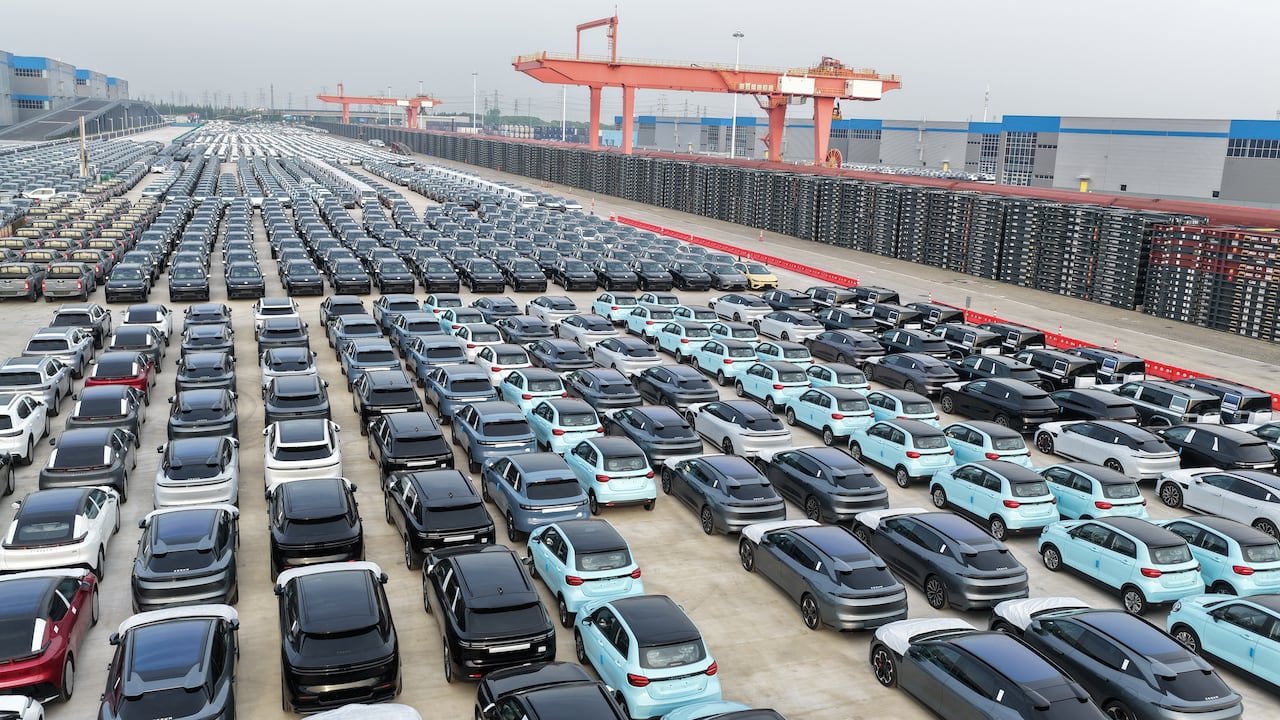
Chinese-manufactured vehicles, including Zeekr models, are prepared for export at the Port of Taicang in Suzhou, China, on April 27, 2026. (AFP/Getty Images)
Nations are also modernizing their energy infrastructure to align with this new landscape. Earlier this year, the U.K.’s top energy provider noted a 50 percent increase in solar panel sales, year-on-year, while escalating energy prices in Asia have propelled the adoption of rooftop solar. Despite Canada’s intent to boost investment in pipelines, the government has also introduced a nuclear strategy aiming to double the capacity of its electrical grid by 2050.
“Electric vehicles, batteries, and solar panels are flying off the shelves because people are seeking alternatives,” Bond remarked.
Nations Pursuing Energy Independence
Bond emphasizes that the broader shift in energy sources has been ongoing for some time. Ember’s review of 2025 noted that renewable sources accounted for over one-third of global electricity generation, marking the first time renewable energy surpassed coal power in a century.
The conflict with Iran has provided a new impetus for people worldwide to consider clean energy solutions.
In response to U.S.-Israeli military actions that commenced in February, Iran blocked the transit of one-fifth of the world’s oil through the Strait of Hormuz. As oil prices soared to nearly $120 per barrel, European Commission President Ursula von der Leyen described it as “the second fossil fuel crisis in just a few years,” following Russia’s invasion of Ukraine in 2022.
“One thing these events are making abundantly clear,” she remarked, “is that we are paying an exorbitant price for our overreliance on fossil fuels.”
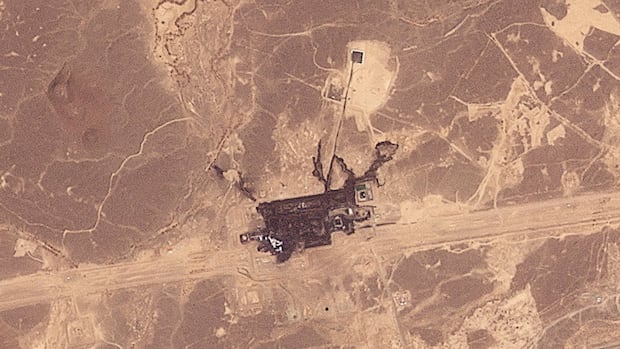
Concerns about global oil supply are rising following a drone attack that prompted Saudi Arabia to close the East-West pipeline facility in the Hejaz region.
This realization appears to be taking root in many countries, particularly across Asia.
For instance, Thailand is pivoting to solar energy in light of escalating natural gas prices. Shortly after the onset of the Iran war, the Philippines declared an energy emergency and its government enacted executive orders to expedite grid connections and various initiatives aimed at generating 1.4 gigawatts of renewable energy (approximately enough to power one million homes).
From an environmental standpoint, the reactions to the energy disruptions caused by the Iran conflict have not all been beneficial; coal consumption is anticipated to reach a record high this year, as per the IEA. Some nations that previously depended on natural gas have had to resort to coal as the main alternative for their electrical grids due to shipping limitations on liquid natural gas (LNG) through the Strait of Hormuz.
Nevertheless, in certain scenarios, the reactive return to more affordable and polluting coal is occurring alongside a proactive clean energy transition. Both Pakistan and the Philippines have increased their coal usage to alleviate some dependence on gas, yet Pakistan’s solar transition has been in the planning stages for several years, with solar energy’s share of the electricity mix nearly tripling between 2023 and 2025, according to Ember.
Despite relying heavily on LNG from Qatar, Pakistan’s Power Minister Awais Leghari emphasized that the nation’s move towards renewables would shield it from disruptions in the Middle East, stating to Reuters, “Pakistan does not plan to invest in any power source that could jeopardize its energy security.”
Erica Downs, a senior research scholar at Columbia University’s Center on Global Energy Policy in New York, noted that electrification inherently enhances energy security.
“What nation wouldn’t want to become increasingly self-sufficient in energy production and supply?”
A study led by Northern Light Capital Partners, based in Montreal, revealed that by March 30, just one month after the outbreak of the Iran war, over 150 countries had declared intentions to invest in clean energy for reasons of energy security.
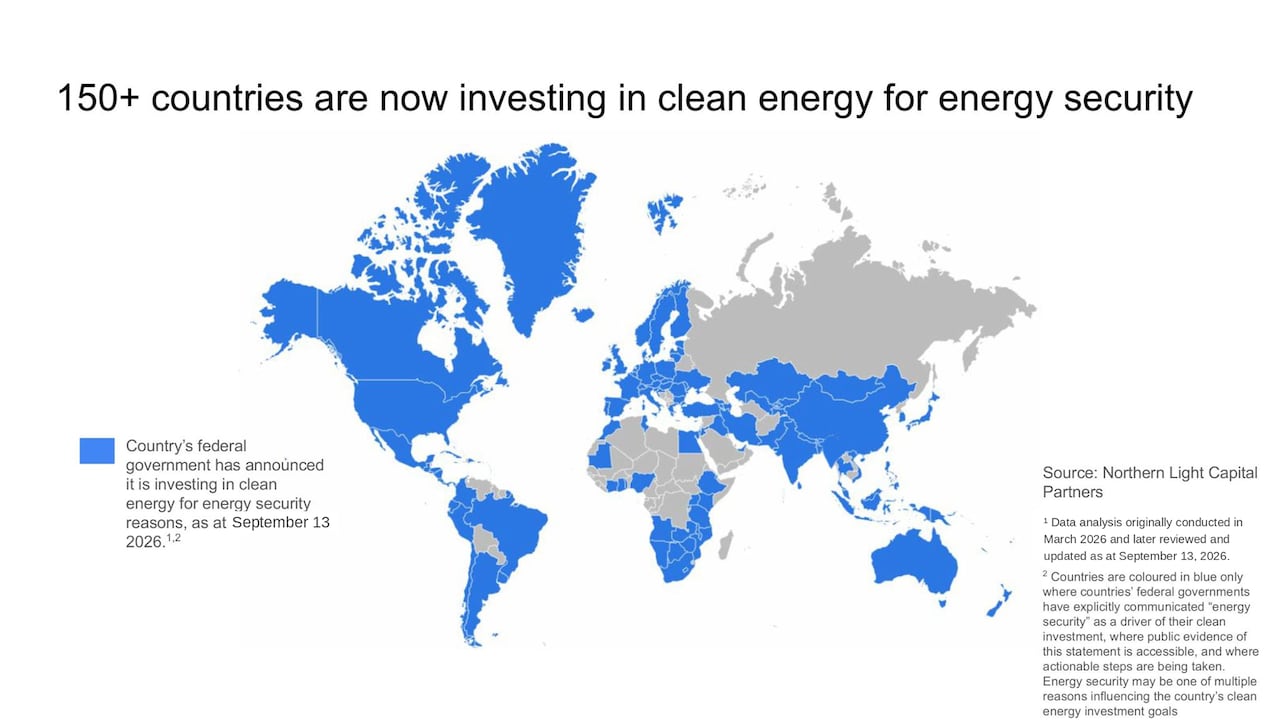
A map indicating countries that pledged to invest in clean energy to enhance national energy security. (Northern Light Capital Partners)
Joanna Klimczak, founder and CEO of Northern Light Capital Partners, remarked, “The tariffs imposed by the U.S. administration introduced unpredictable volatility into clean energy supply chains. Simultaneously, the conflict in Iran has acted as a significant catalyst for global clean energy investment.”
‘A Long-Term Journey’
The narrative of the renewable energy shift cannot be complete without acknowledging China’s contribution. The country has been manufacturing solar panels, wind turbines, and electric vehicles at an astonishing rate.
In the early stages of his second term, Trump imposed hefty tariffs on a range of Chinese goods, including solar panels. As a result, many panels were redirected to Africa, aiding countries like Rwanda, Senegal, Ivory Coast, and even oil-rich Nigeria in reducing their reliance on fossil fuels such as diesel.
Fawen Nyakudya, managing director of PFN Solar Systems based in Zimbabwe, shared with German media outlet DW that the cost of equipment decreased when the trade war commenced, as the Chinese sought to offload their stock.
Klimczak highlighted that due to years of investment in clean technology manufacturing, China has been capable of meeting global demand for renewable energy at a critical juncture.
Downs noted that unlike previous oil crises in 1973 (due to the OPEC embargo), 1979 (the Iranian revolution), and 1990 (the first Iraq war), “technologies now exist that provide alternatives to fossil fuels that were unavailable in past decades.”
These alternatives are not only available but often more cost-effective to implement than conventional fossil fuels.
The International Renewable Energy Agency reports that since 2010, the installation costs for solar energy have decreased by 87 percent, onshore wind by 55 percent, and battery storage costs have fallen by 93 percent.
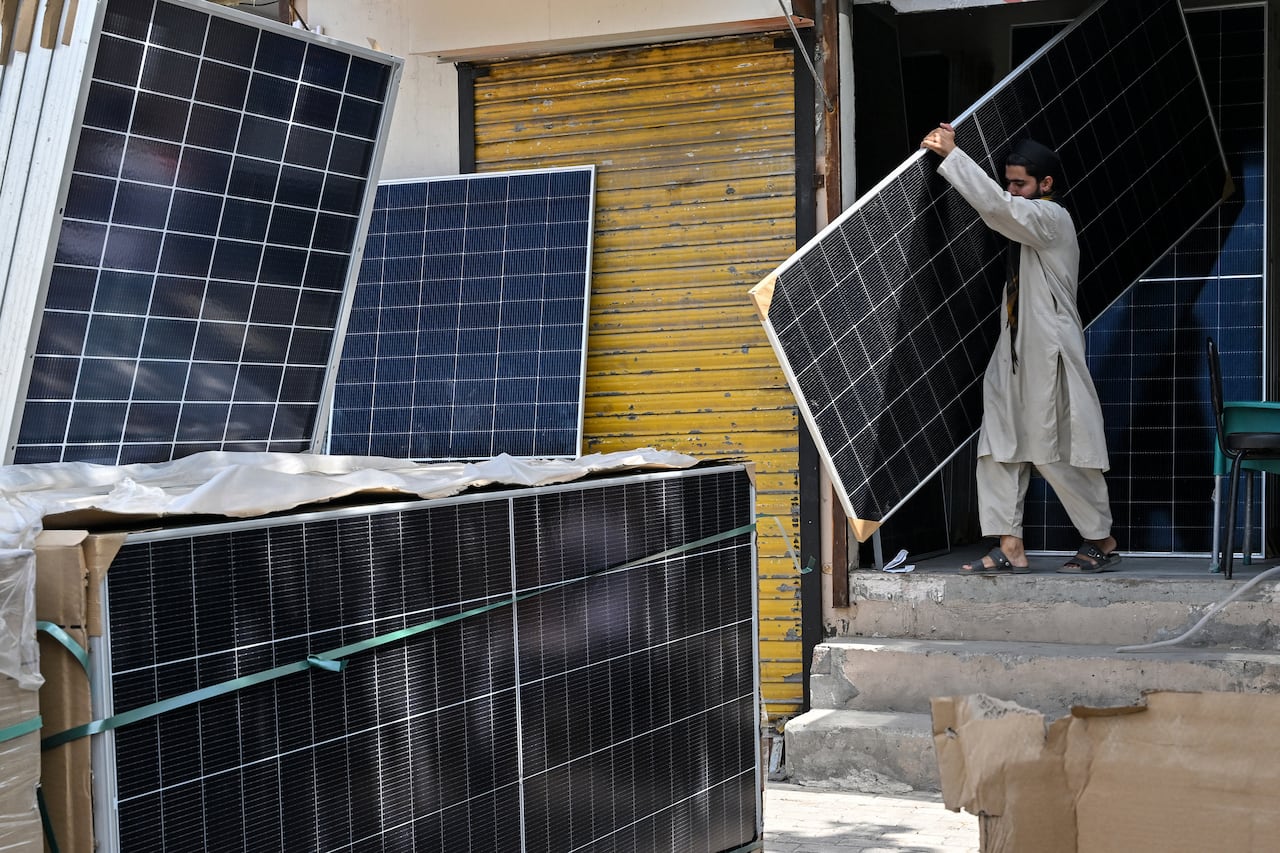
A worker transports solar panel plates at a market in Lahore, Pakistan, on June 12, 2026. (Arif Ali/AFP/Getty Images)
Downs expressed that it is “still somewhat premature to determine” if Trump’s trade and military actions have a lasting effect on the global energy transition. A critical question remains whether oil prices escalated sufficiently “to instigate a more permanent shift towards clean technology.”
On Monday, Brent crude oil prices reached $109 per barrel — the highest since May. However, prices have not yet reached the elevated levels that some analysts anticipated earlier in the year.
“Oil did not reach $200 [per barrel] — it didn’t even hit $150,” Downs remarked. “Some have questioned whether not reaching such extreme price points is actually beneficial in the long run.”
Bond asserts that the energy transition is unavoidable, and events like these serve to hasten its progress.
“This is a long-term journey, not a sprint. The shift from fossil fuels to alternatives has been ongoing for an extended period,” he explained. “And every time there’s a disruption like this, it simply accelerates the change a bit more.”

